What's Capacitance All About?
A capacitor is two metal plates separated by an insulator (dielectric). Hook up voltage, and boom – one plate gets positive charge, the other negative. That's capacitance: how much charge it can hold!

Figure 1: Watch the capacitor charge up – charge builds between the plates!
The bigger the plates, closer together, better dielectric = more capacitance. They're everywhere: storing energy, filtering noise, timing signals...
The Key Formula
Super simple:
C = Q/V
Where:
- C = Capacitance (farads, F – usually microfarads)
- Q = Charge stored (coulombs)
- V = Voltage across it (volts)
Mixing Capacitors
Series? Total C drops: 1/C_eq = 1/C₁ + 1/C₂ + ...

Figure 2: Series – voltage splits, same charge
Parallel? Adds up: C_eq = C₁ + C₂ + ...
Figure 3: Parallel – same voltage, charge adds
Power in a Capacitor
Energy stored: E = (1/2) C V²
Or other forms like E = (1/2) Q V. It's the electric field doing the work!
Units Quickie
- Capacitance: Farads (F), μF, nF, pF
- Charge: Coulombs (C)
- Voltage: Volts (V)
- Energy: Joules (J)
Where You'll See Them
- Smoothing bumpy power supplies
- Timing blinks in LEDs
- Blocking DC, passing AC signals
- Tuning radios
Power Supply Smoothing
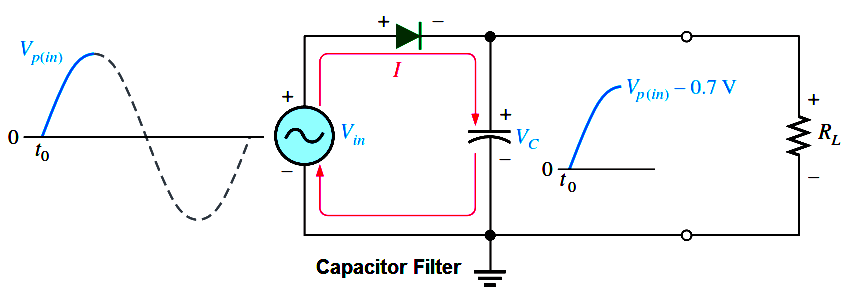
Figure 5: Capacitor irons out power ripples for clean DC
RC Timer Fun
Figure 6: Capacitor + resistor = perfect delays!